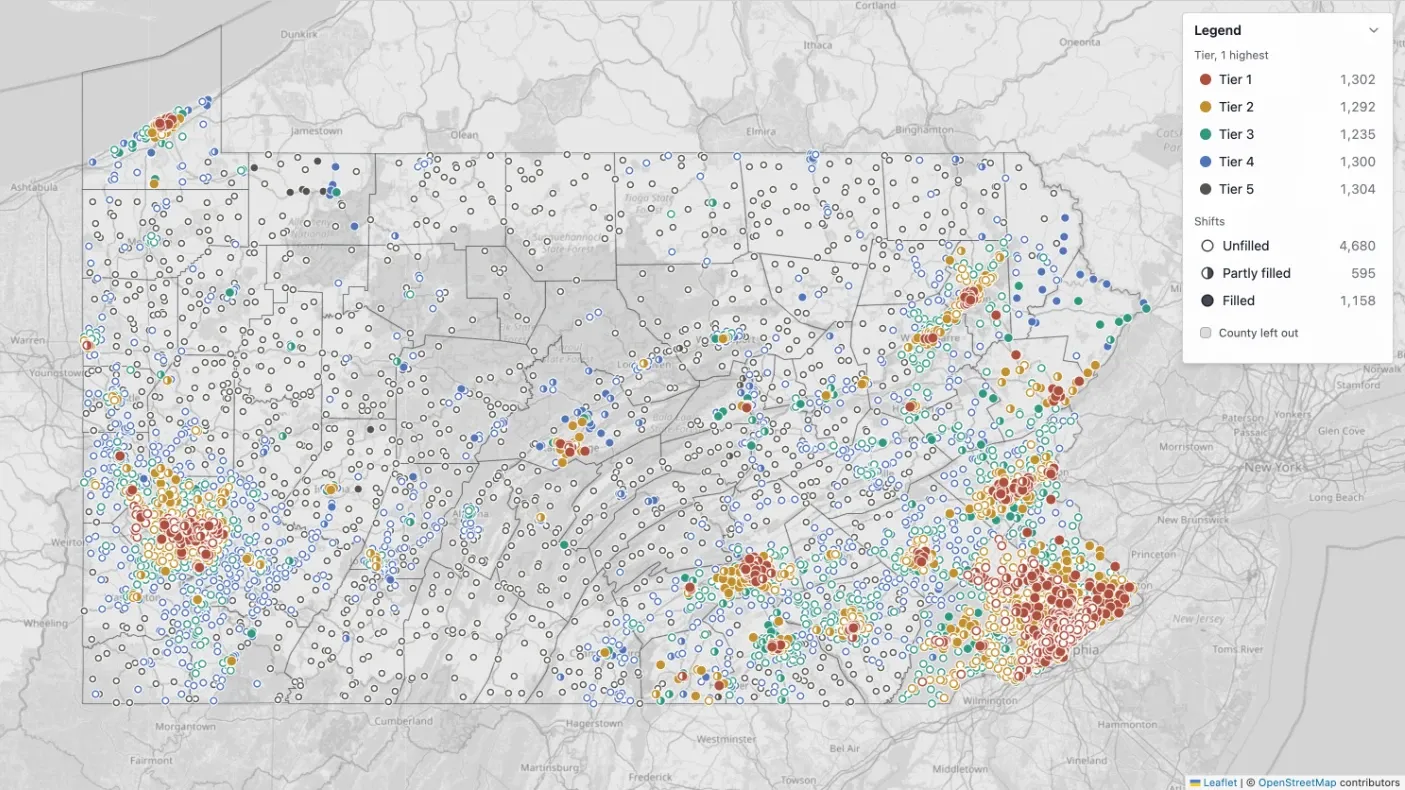
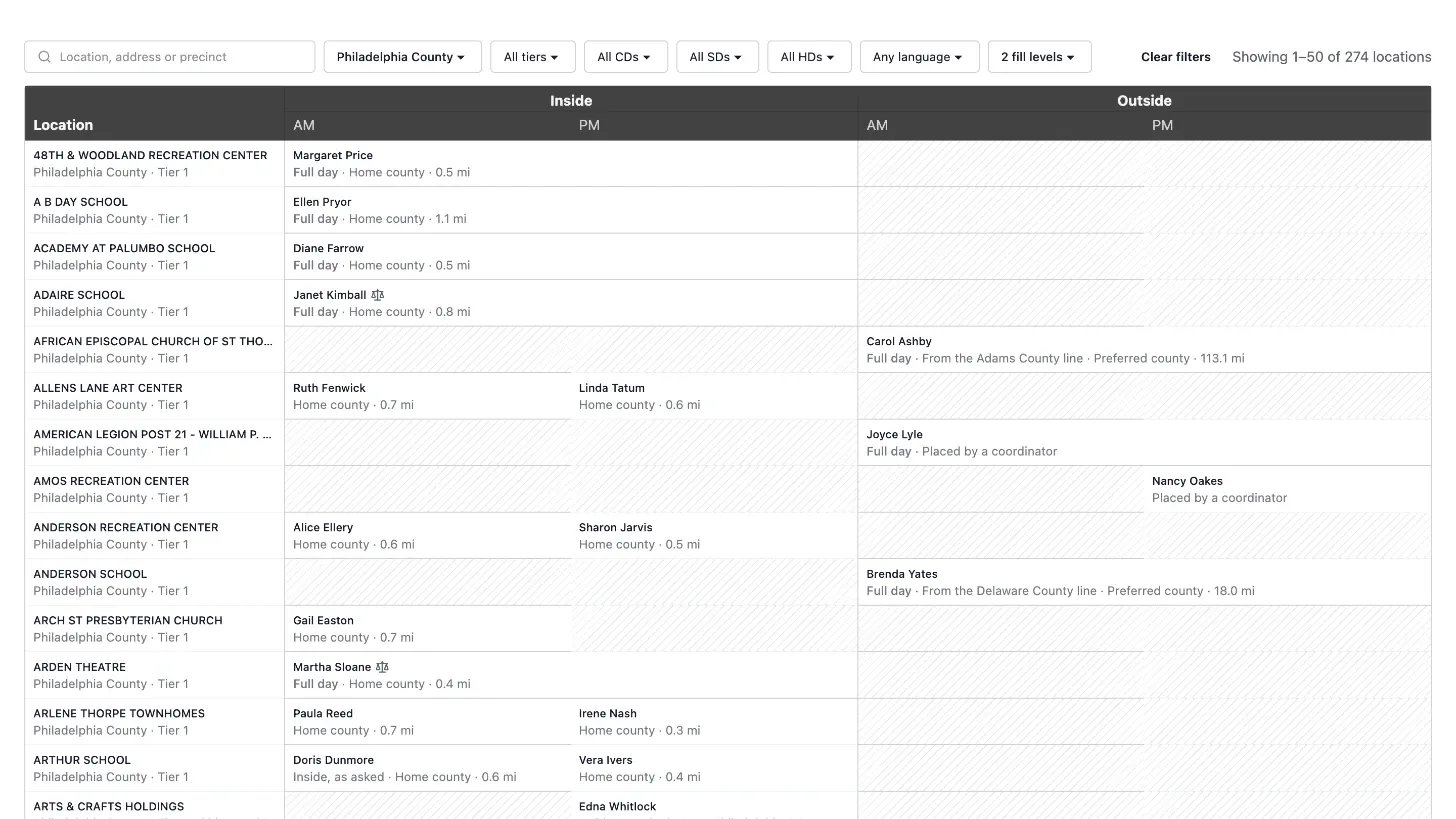
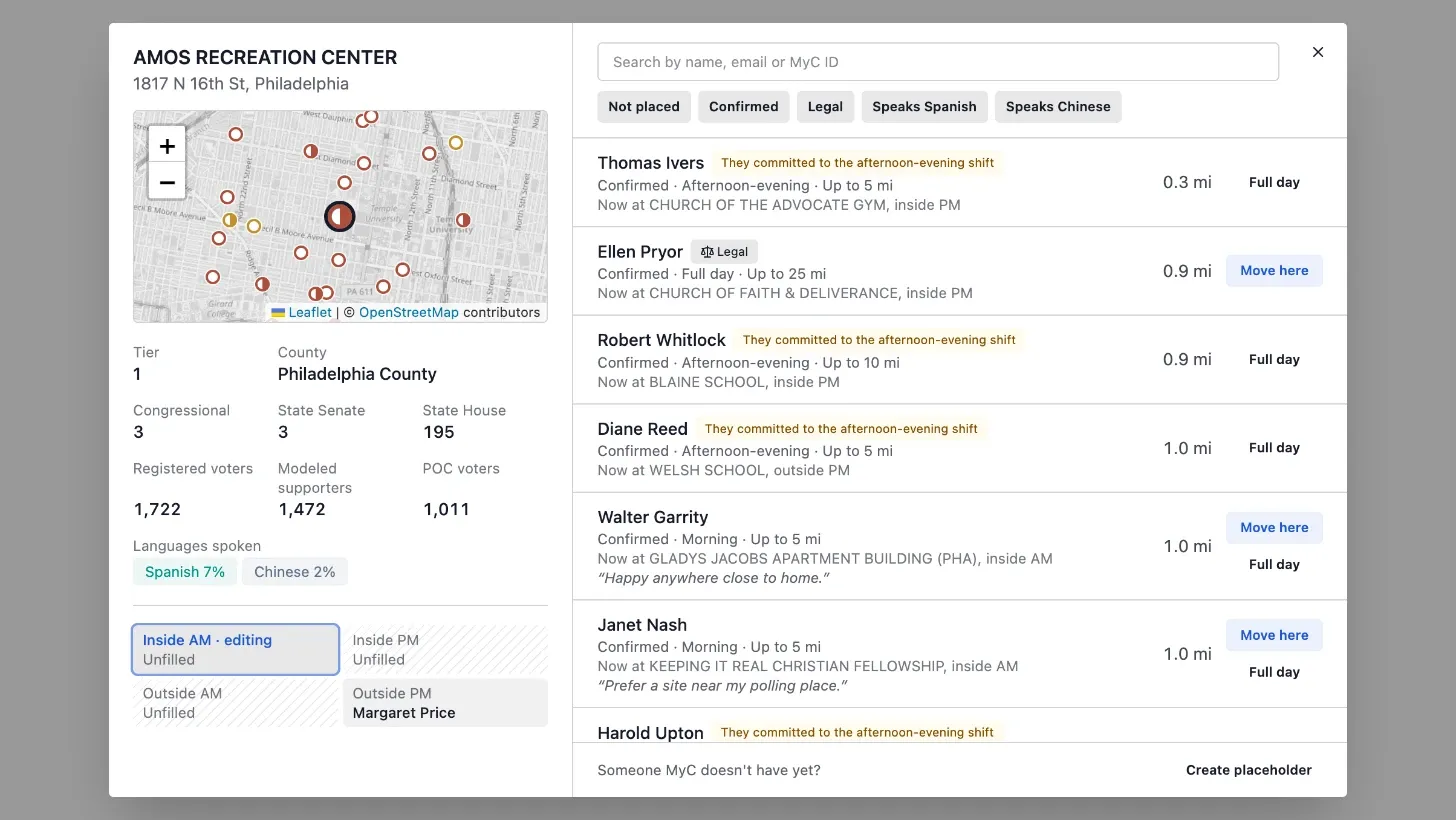
On Election Day, the voter protection team sends volunteer poll observers to thousands of polling places across Pennsylvania. This tool was built to facilitate those assignments, ensuring coverage across the state while accommodating volunteers’ preferences. Each polling place has four shifts: morning or afternoon, inside or outside. Locations are ranked by priority, so getting the right person into the right shift matters.
What it does
- A single roster. Thousands of volunteers, each matched to their voter-file record so they can be credentialed, along with their preferences and skills, such as how far they’re willing to travel and what languages they speak.
- Drafted by a solver, finished by people. Auto-assign produces a first pass according to rules the coordinators set, such as which priority tiers to cover and how far observers will travel. From there, coordinators move, pin, or remove anyone by hand, and a re-run preserves every manual change.
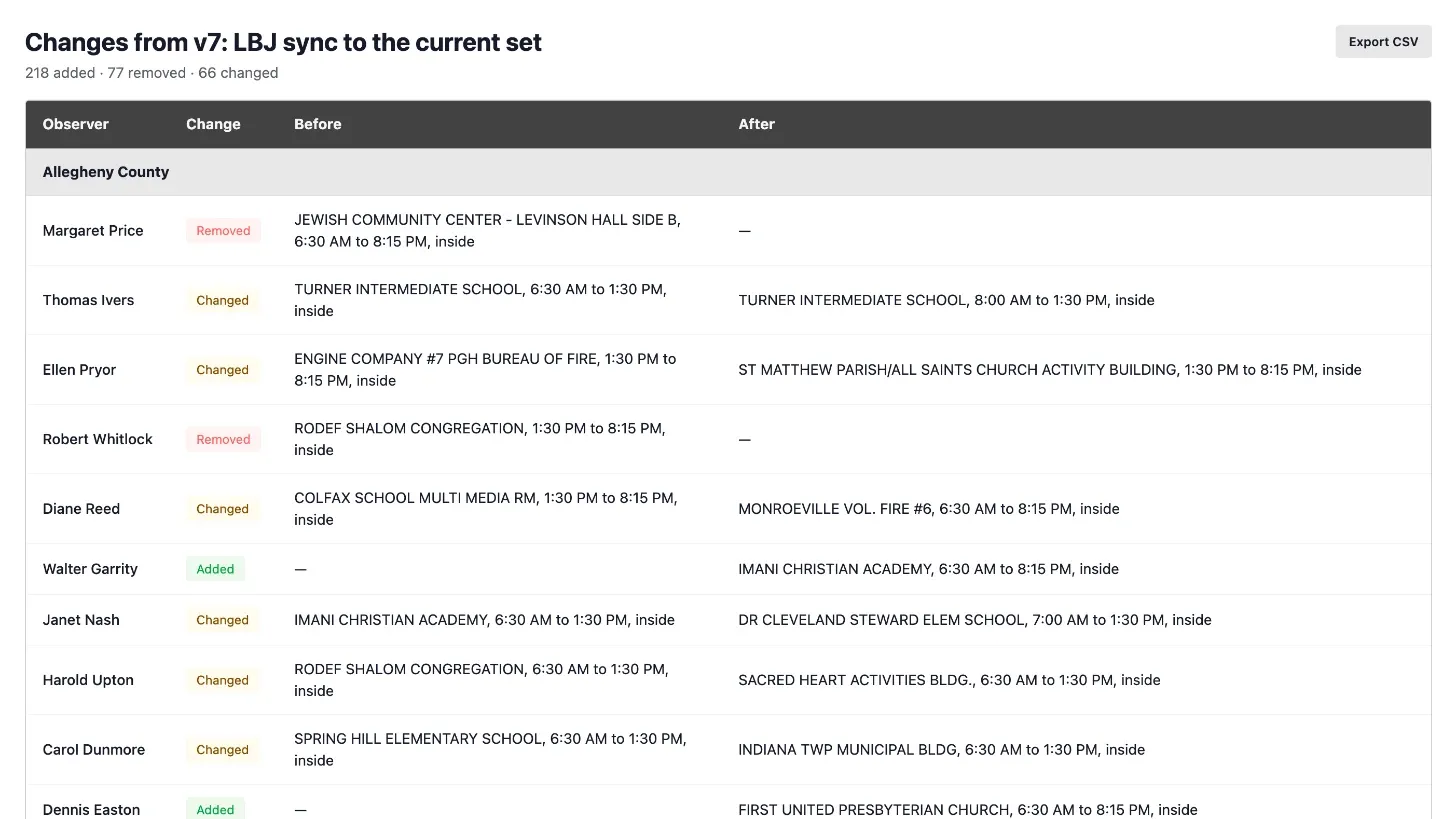
- Version control. Building a plan is iterative, so coordinators can experiment freely: save versions, compare their coverage side by side, and roll back if needed.
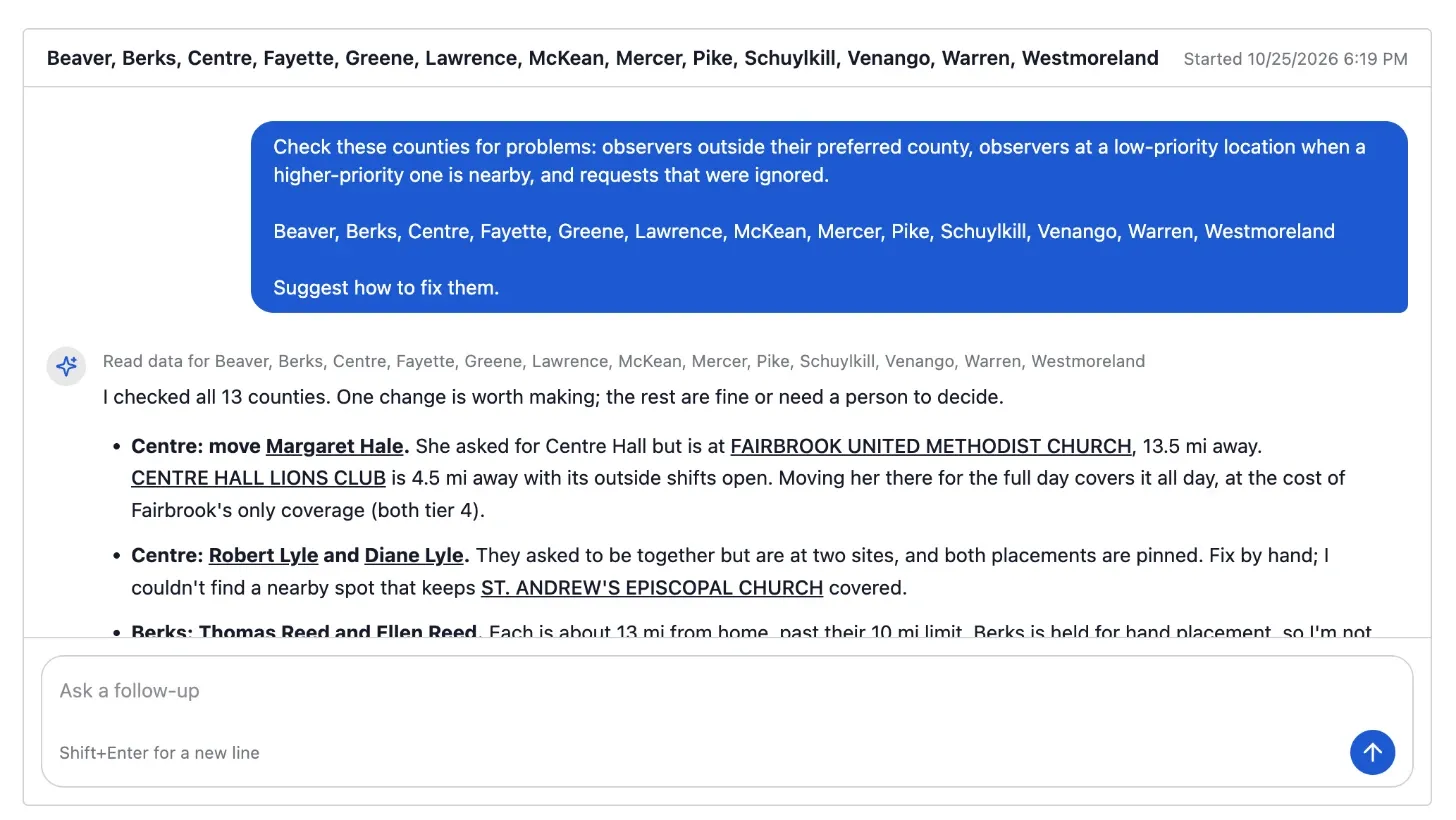
- Ask Claude. Coordinators can ask questions like “why is tier 1 thin in Allegheny County?” or “who near Scranton speaks Spanish and is unplaced?”, and get answers drawn from the data. Claude can suggest changes, but a coordinator decides whether to make them.
- Hand-off. The final set exports for credentialing, and every observer receives an email with their assignment and buttons to confirm it or request a change.
From the team
“This is a Ryan McFarland Appreciation Post – VoPro would have crashed and burned without him these last couple weeks, not a day has gone by where he hasn’t executed flawlessly, solved problems quickly, and most importantly he always asked us the questions we hadn’t thought of. Data Teams make campaigns happen!”
Jake Sternberger, Deputy Director of Voter Protection
Built with
Django, PostGIS, htmx, OR-Tools, and the Claude API.