Some voters can’t cast a ballot without help. They may need a designated agent to pick up and return a mail ballot, or a ride to the polls. The voter protection team’s voter assistance program pairs them with volunteers who can do that, and this tool is how the team runs it.
Why we moved off Google Sheets
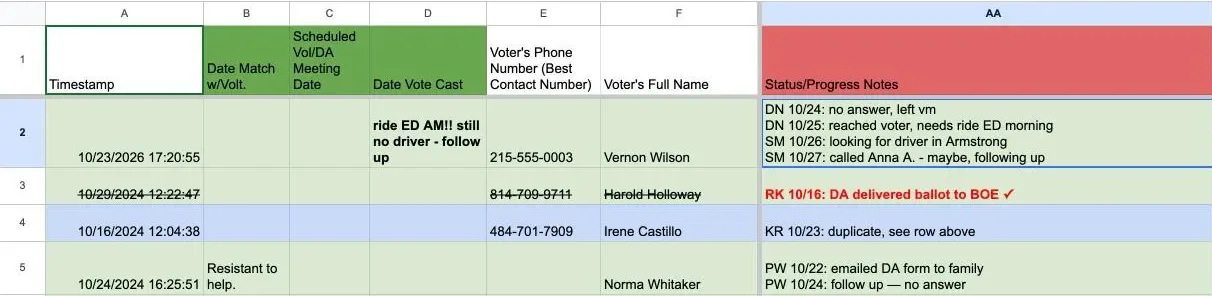
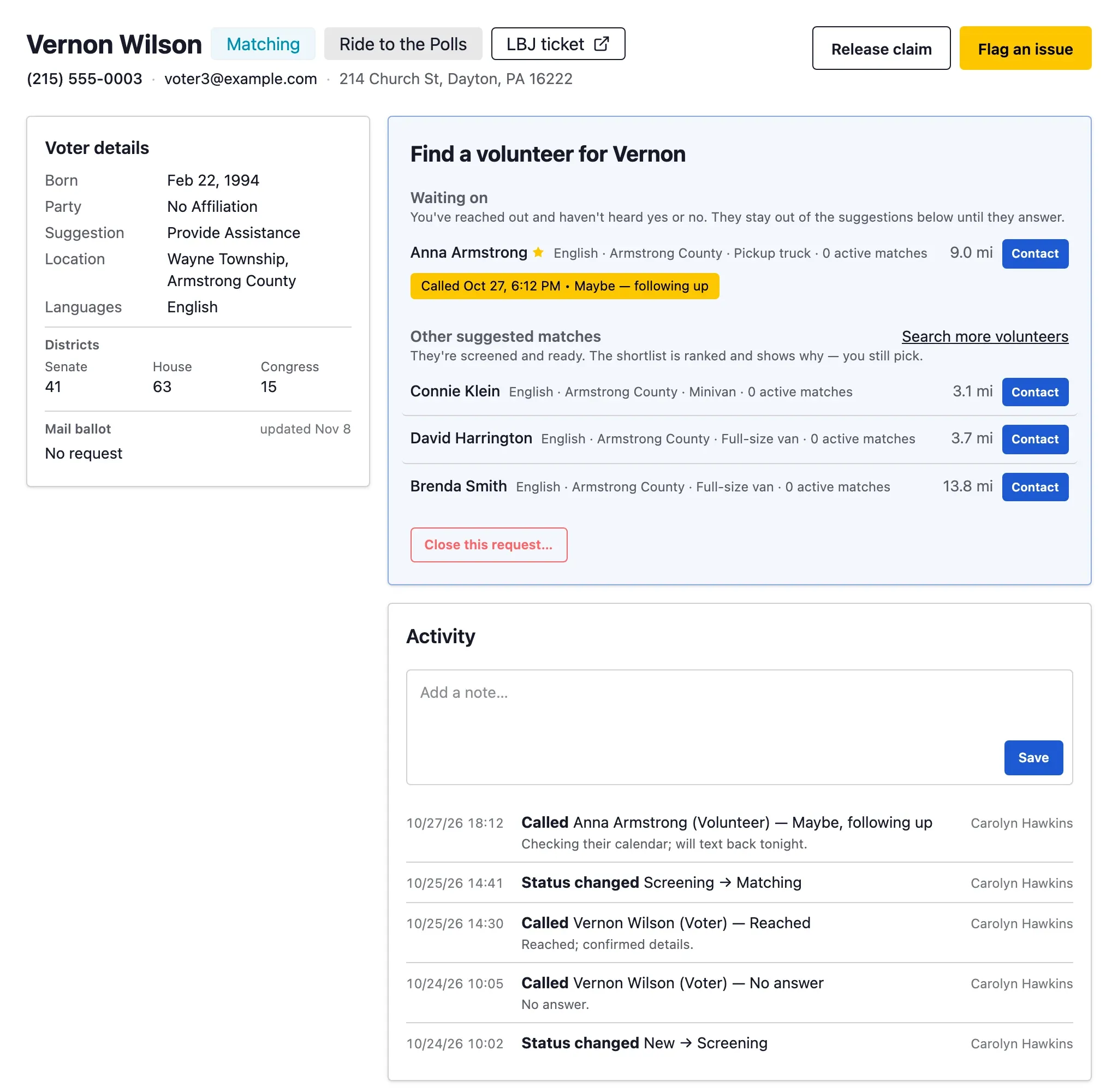
The program started in a spreadsheet, one row per request. It was fragile, since a single stray edit could break a row, and hard to read, with a request’s whole history stacked into one notes cell. The web app gives each request its own page and puts the context a matchmaker needs in front of them: the voter’s districts and ballot status, the nearest available volunteers, and a dated log of every call and status change.
How it works
- A voter reaches out. Voters contact the voter assistance hotline, and their request is entered through an intake form. Possible duplicates are flagged for a person to review, never blocked, so a false match costs a coordinator thirty seconds and not a voter their request.
- A matchmaker takes the case. Matchmakers claim open requests from a queue, call the voter to confirm what they need, and log every attempt to reach them. Each request shows one clear next step.
- A volunteer is matched. The app suggests volunteers ranked by distance, travel radius, languages spoken, availability, a car for rides, and how many matches each already has.
- The volunteer gets instructions. Once matched, the volunteer receives an email with county-specific instructions for the job.
- Tracked to the finish. Every call and status change is logged on the request, so nothing slips. Coordinators can see what’s overdue or needs a decision, and hotline staff can give a caller an update on their request.
Built with
Django, PostGIS, htmx, Alpine.js, and Tailwind.